Tarot Journal Canva KDP Templates: Your All-in-One Toolkit
For anyone who has ever felt the pull to create a beautiful, functional tarot journal but hesitated at the sheer volume of work involved, there’s a smarter path forward. The journey from a blank page to a finished, print-ready book is often filled with design decisions, formatting headaches, and hours of layout work. This is where a comprehensive toolkit like the Tarot Journal Canva KDP Templates changes the entire game. It’s not just a collection of pages; it’s a fully realized system designed to give you a professional-quality interior in a fraction of the time.
Designed for Real-World Use, Not Just Aesthetics
The core appeal of these templates lies in their blend of practicality and polished design. The visual personality is one of clean, modern mysticism. You’ll find plenty of whitespace, which is crucial for a journal—it gives users room to write, reflect, and breathe. Typography choices are thoughtful, balancing elegant serif fonts for headings with highly legible sans-serif fonts for body text and prompts. This careful pairing ensures that the pages are not only beautiful to look at but also a genuine pleasure to use.
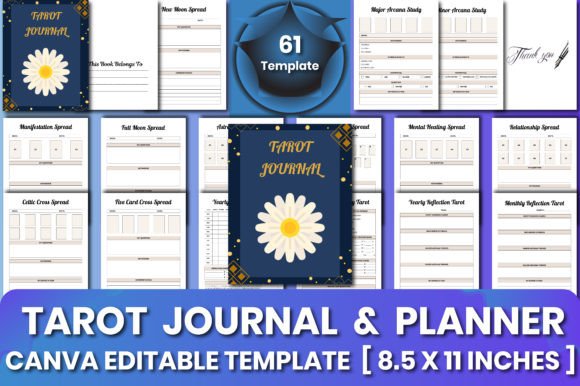
The overall style avoids overly ornate or niche aesthetics. Instead, it offers a versatile foundation that can be adapted to a wide range of personal brands and audiences. Whether your focus is on gentle self-care, rigorous spiritual study, or creative divination, the design provides a neutral yet sophisticated canvas. The "This Book Belongs To" page sets a personal tone, while structured spreads like the Celtic Cross or Relationship Spread provide immediate, practical value to the end-user.
A Strategic Asset for Entrepreneurs and Creators
From a business perspective, this toolkit is a significant efficiency booster. For designers and publishers, it eliminates the most time-consuming phase of interior design. Instead of starting from scratch, you’re working with a professionally structured document. Every spread, from the monthly reflections to the astrological study pages, has already been considered for visual hierarchy and user flow. This allows you to focus your creative energy on customization—tailoring the cover, adjusting color schemes, or adding your unique brand elements to the interiors.
For bloggers and content creators in the wellness or spirituality space, these templates offer a direct path to product creation. You can develop a companion journal for your community that aligns perfectly with your existing brand identity. The files are 100% customizable in Canva, a tool many already use for social media graphics, making the learning curve minimal. The included printable PDF, JPG, and PNG formats ensure you have the exact file type needed for different stages of publishing and marketing.
Practical Applications Beyond the Journal
The utility of these spreads extends far beyond a single book. Consider using individual pages as standalone digital products. A beautifully designed "Full Moon Spread" page could be a printable offered to newsletter subscribers. The "Five Card Cross Spread" template could be adapted into a social media graphic series. For small business owners, especially in the coaching or holistic services sector, creating a branded tarot journal is a powerful way to add a high-value physical product to your offerings with minimal overhead.
The included variety of spreads is particularly valuable. Having templates for mental healing, decision-making, and manifestation allows you to create a journal that feels comprehensive and deeply useful. This isn’t just a logbook for card pulls; it’s a guided framework for personal insight. That perceived value is what turns a simple journal into a cherished tool for your audience.
Key Considerations for a Flawless Final Product
While the templates provide an incredible headstart, a few strategic steps will ensure your final product stands out. First, spend time customizing the color palette. Even subtle shifts in accent colors can align the interior with your cover design and overall brand. Second, review the font pairings. Canva makes it easy to swap fonts, so ensure the chosen typefaces resonate with your target demographic—perhaps a more grounded serif for a professional audience or a softer sans-serif for a gentle, healing focus.
Test the readability by printing a sample page. What looks clear on screen can sometimes feel cramped on paper. Ensure there is sufficient line spacing and that the text prompts are clear without being overwhelming. Finally, think about the user’s journey. Does the sequence of spreads make sense? You might reorder sections to create a more logical flow from daily pulls to monthly summaries and yearly reflections.
This toolkit is ultimately about empowerment. It removes the technical and design barriers that stop so many great ideas from becoming real products. By handling the complex layout and structure, it allows you—the entrepreneur, the creator, the designer—to step into the role of curator and brand strategist. You get to focus on the message, the audience, and the final polish, confident that the foundation is solid, professional, and ready for the world.